
The AI Subscription Economy: Is It Actually Sustainable for Users?
AI companies are trying to balance subscription pricing, profitability and infrastructure costs while making extraordinary bets on the future of computing. Their models are getting faster and more capable. But the economics of paying for those models deserve just as much scrutiny.
The important question is not whether artificial intelligence will matter. It already does. The question is whether continually renting access to it will remain financially sustainable for the people using it every day.
An $80.7 billion loss is not an $80.7 billion electricity bill
Anthropic reported a net loss of $80.7 billion for the first six months of 2026, a number that understandably attracted attention. However, its SEC filing attributes $72.4 billion of that figure to changes in the fair value of convertible notes and related financial instruments. Most of the headline loss was non-cash accounting, not money spent operating data centers.
That distinction matters. It would be misleading to describe the full reported loss as spending on GPUs or electricity. At the same time, Reuters reported that Anthropic spent nearly $9 billion on computing capacity and infrastructure during the period. The industry really is extraordinarily capital-intensive, even without misreading the accounting.
Anthropic: the accounting breakdown
Reported component | Amount | Share |
|---|---|---|
Non-cash fair-value charges | $72.4B | 89.7% |
Other reported net-loss components | $8.3B | 10.3% |
Total H1 2026 net loss | $80.7B | 100% |
Important: The remaining $8.3B is not a measure of operating cash burn. Infrastructure spending is reported separately.

Of course, these companies are investing in the future. Nobody disputes that. But a long-term bet by a technology company does not automatically make the subscription economics attractive to every consumer.
More powerful models, more complicated subscription rules
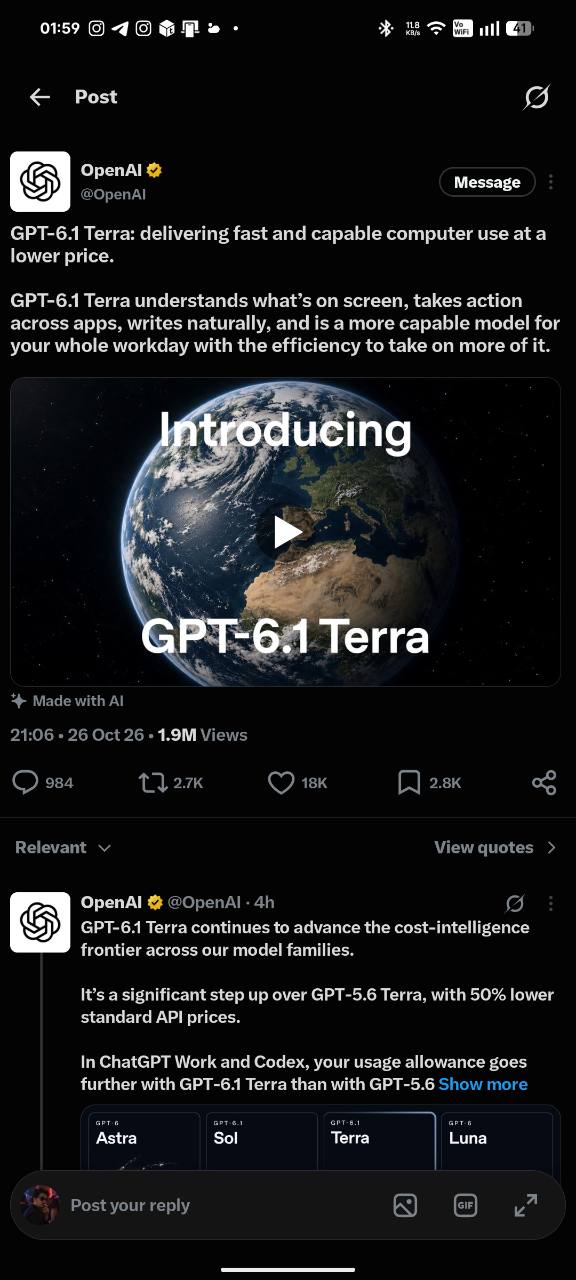
OpenAI continues to develop smarter and more efficient models while reorganizing access across subscription tiers. Its published individual Pro plans are $100, $200 and $500 per month, in addition to the $20 Plus plan. Higher tiers include greater allowances, but the relationship between price and usage is not always straightforward.
The company's own Pro documentation notes that some newer Pro 200 subscriptions receive lower included allowances than earlier grandfathered versions. That is a meaningful reminder: a fixed monthly subscription price does not necessarily guarantee a fixed amount of computing power forever.
Starting in December 2026, OpenAI says the usage allowance for ChatGPT and Codex will be shared on Plus, Pro and Business plans. More demanding tasks and models will consume more of that allowance, although Instant chat will not count toward it. OpenAI expects most users will not need to wait for usage resets more frequently than before, but the real-world effect on mixed coding and general AI workflows is still to be seen.
ChatGPT and Codex: shared usage
CHATGPT → | COMMON ALLOWANCE | ← CODEX |
|---|---|---|
Eligible model usage | Starting Dec 2026 | Eligible coding usage |
Compute-heavy tasks | More tokens consumed | Compute-heavy tasks |
Instant chat is excluded. OpenAI expects most users will not hit limits more frequently, but the impact remains uncertain.
Banked Codex resets are another example. OpenAI describes them as discretionary promotional benefits, not guaranteed subscription entitlements. Depending on occasional resets is not the same thing as having predictable included capacity.
The concern is not that limits exist. Cloud computation has real costs. The concern is that customers increasingly have to calculate which model, task and subscription tier is worth consuming their allowance.
The real price is the price over time
A $100 subscription costs $1,200 per year. At $200 per month, the bill is $2,400. At $500, it becomes $6,000. These amounts are not trivial simply because AI is a professional tool.
$100 per month = $1,200 per year = $3,600 over three years.
$200 per month = $2,400 per year = $7,200 over three years.
$500 per month = $6,000 per year = $18,000 over three years.
Subscription costs over 36 months
Monthly | Annual cost | 3-year total |
|---|---|---|
$20 | $240 | $720 |
$100 | $1,200 | $3,600 |
$200 | $2,400 | $7,200 |
$500 | $6,000 | $18,000 |
The $500 tier costs 25 times as much as the $20 tier over the same period. Excludes taxes and additional credits.
Those totals exclude taxes, additional paid credits and the other software subscriptions that creative professionals, developers and businesses may already be carrying.
Now ask a simple question: at what point does renting somebody else's computational infrastructure become less economical than purchasing computational capacity of your own?
The local alternative is not one small GPU
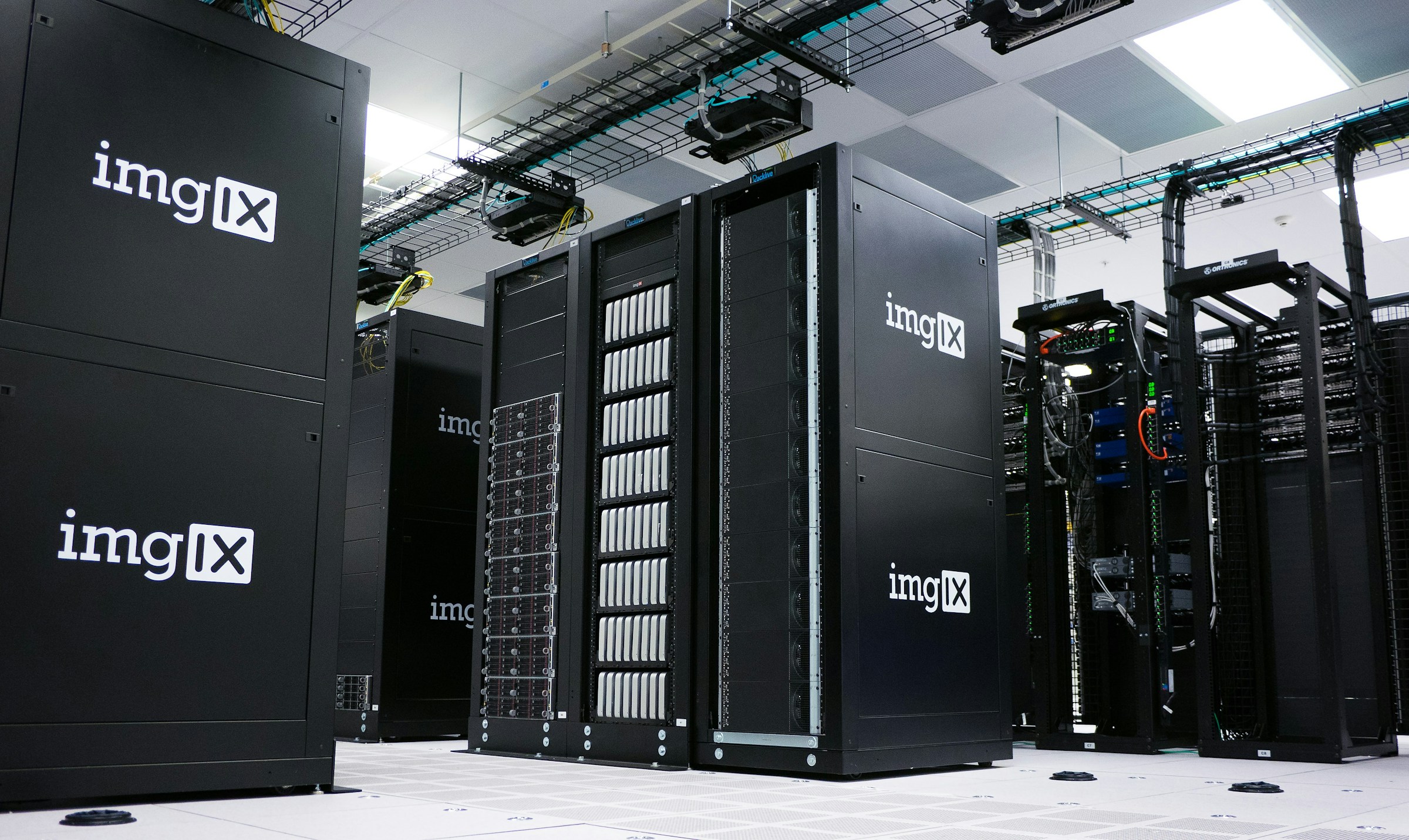
I am not talking about running a tiny language model on a single graphics card and pretending it matches every frontier cloud service. I am talking about a serious multi-GPU local AI workstation, designed for repeatable workloads that justify the investment.
Two GPUs with 16 GB of VRAM each provide 32 GB of aggregate capacity. Four provide 64 GB; six provide 96 GB. With appropriate quantization and inference software capable of distributing model weights across devices, this can support substantial open-weight LLMs on your own hardware.
Aggregate VRAM is not the same as one seamless memory pool. PCIe bandwidth, power delivery, cooling, motherboard slot layout, driver support, and model-parallel inference overhead all matter. More GPUs do not automatically mean faster inference, and a local system cannot guarantee the same performance or features as the latest hosted frontier models.
Multi-GPU VRAM capacity
16 GB GPUs | Aggregate VRAM | Relative capacity |
|---|---|---|
2 GPUs | 32 GB | ■■ |
4 GPUs | 64 GB | ■■■■ |
6 GPUs | 96 GB | ■■■■■■ |
Aggregate VRAM is not unified memory. Compatibility, PCIe bandwidth, power, cooling and software determine real-world performance.

But ownership changes the long-term calculation. The workstation still consumes electricity, requires maintenance and depreciates. Yet its hardware remains yours, can serve multiple projects, and does not impose a vendor's subscription-token reset on local inference.
For some people, buying such a system makes no sense. For heavy users with predictable workloads, the total cost of ownership deserves to be compared against three or five years of recurring cloud subscriptions, not merely against one month's price.
What about the $20 subscriber?
A Plus subscription at $20 per month is a very different proposition from a $200 or $500 plan. It can remain excellent value for occasional tasks, especially when compared with the cost of maintaining a powerful local machine.
Still, usage restrictions are especially noticeable to people who depend on Codex and other agentic tools for daily work. Paid access is not unlimited access. When users exhaust their allowance, their options may include waiting for a reset, switching plans or buying more eligible credits.
I would not claim that a particular percentage of OpenAI's customers belong to Plus without verified current subscriber data. The underlying issue does not depend on that statistic: a lower-priced paying tier can feel inadequate when work becomes more compute-intensive.
Will efficiency make AI cheaper—or simply more profitable?
Here is the contradiction. AI companies are working to make inference cheaper, but a reduction in the cost of producing a response does not guarantee a corresponding reduction in the price charged to customers.
Growing demand gives providers pricing power. Frontier training and large-scale inference still require significant capital. Competition and more efficient chips and models may push costs downward, but premium capabilities can also absorb those savings through higher usage, faster modes and more complex tasks.
So will pricing eventually be optimized across every tier, or will providers keep charging what demand allows while retaining usage restrictions? My expectation is the latter in the short term. That is a prediction, not an established fact.
The industry is still discovering its economic equilibrium. Technology can advance much faster than the business model needed to deliver it affordably.
The most rational future may be hybrid
Cloud AI is not going away, and local AI will not replace every frontier capability. The more interesting possibility is a hybrid workflow: use locally owned GPUs and open-weight models for routine, private or high-volume tasks, and pay for cloud access when genuinely superior models are needed.
Choose the compute based on the workload
LOCAL AI · OWNED GPUs | CLOUD AI · RENTED COMPUTE |
|---|---|
High-volume routine inference | Advanced frontier-model tasks |
Private or offline workflows | Specialized hosted tools |
Predictable repeated processing | Peak-demand bursts |
Hardware, energy and maintenance | Subscriptions and usage charges |
Hybrid workflow: assess the task → run it locally when practical → use cloud AI when its capabilities justify the cost.
For filmmakers, editors, researchers and developers, that balance could offer more control over costs and more freedom to choose tools. It also means treating compute expenditure like any other production budget: measuring actual needs rather than chasing the most expensive tier.
AI companies are building the computational infrastructure of the future. But sooner or later, users should ask whether continuously renting it makes better financial sense than owning part of it themselves.
Technological progress does not automatically guarantee economic sustainability. And just because companies can justify spending billions does not mean their customers should accept increasingly expensive subscriptions indefinitely.

















Comments